
Software & Development
Flutter vs React Native: which is right for your app?
Flutter or React Native for your Android and iOS app? Compare how they work, performance, design, team skills and maintenance to choose with confidence.
By Yash Gupta, Full Stack Developer2 min read
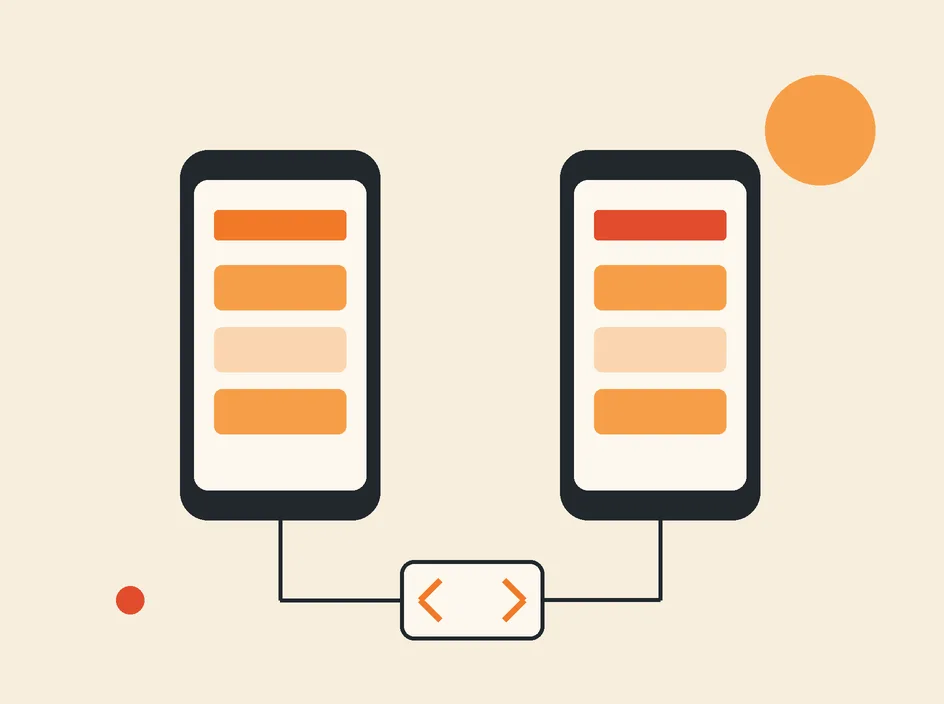
One codebase, two app stores
Building separate Android and iOS apps means two codebases, two teams and twice the maintenance. Flutter and React Native solve this by letting one team build both apps from a single codebase. Both are mature, widely used and good choices for most business apps.
So how do you choose? It mostly comes down to your team, your design and the rest of your technology.
How they work
- Flutter is backed by Google. Apps are written in Dart, and Flutter draws the whole interface itself, so the app looks the same on every device.
- React Native is backed by Meta. Apps are written in JavaScript or TypeScript with React, and the interface uses the phone's native components, so it feels like a standard Android or iOS app.
Comparing the two
Performance
For typical business apps, such as booking, ordering, customer accounts, field staff tools and dashboards, both perform well and users will not notice a difference. Very animation-heavy or graphics-heavy apps sometimes favour Flutter, while apps that lean on many native device features may favour whichever has the better library for that feature.
Design and user interface
- Flutter makes it easy to build a custom, brand-led design that looks identical on Android and iOS.
- React Native uses native components, so apps follow each platform's look and feel more naturally.
Team skills
- If your team already works with React or JavaScript, React Native lets them reuse those skills and sometimes share code with your website.
- If you are starting fresh, Flutter's single language and complete toolkit make it quick for a new team to become productive.
Libraries and integrations
Both have large ecosystems for payments, maps, push notifications, analytics and login. Before choosing, check that the specific integrations you need, such as a payment gateway or a hardware device, are well supported.
Long-term maintenance
Both get regular updates from their backers and communities. Plan for yearly updates to keep up with new Android and iOS versions, whichever you choose.
Which should you choose?
Choose Flutter when
- You want a custom design that looks the same on every phone
- Your team is new to both, or you are hiring a team for the app
- The app has rich animations or a highly branded interface
Choose React Native when
- Your team already knows React or JavaScript
- You have a React website and want to share skills or code
- You want the app to follow each platform's native look closely
Both can deliver an excellent app. The better choice is the one your team can build and maintain well for years.
What it costs
The framework rarely changes the price much; features, screens and integrations do. Our mobile app development cost guide explains the main factors, and the cost calculator gives a rough range for your app in seconds.
Build your app with YLS
We build cross-platform apps with both frameworks. You can hire a Flutter developer or a React Native developer, or let us deliver the full app through our app development services. Contact us and we'll recommend the right framework for your project.
Find the right next step for your business
Related articles
Software & Development
Agency vs freelancer vs in-house developer: how to choose
Compare hiring a development agency, a freelancer, an in-house developer or a dedicated developer on cost factors, control, speed, risk and long-term support.
Read article
Software & Development
Software development cost: India vs the USA and UK
Why software development costs differ between India, the USA and the UK, what you pay for beyond the hourly rate, and how to compare total cost fairly.
Read article
Software & Development
Mobile app development cost: Android, iOS and cross-platform
What decides the cost of a mobile app, from Android vs iOS vs cross-platform to features, backend, design and maintenance, and how to plan your first version.
Read article